
A new Mirai-based modular Linux botnet malware called Evooo1Bot targets Internet-connected gateway devices and turns them into SOCKS5 traffic forwarding nodes.
The malware’s capabilities extend beyond turning devices into proxy nodes and include stealing credentials, SSH brute forcing, and launching distributed denial of service (DDoS) attacks.
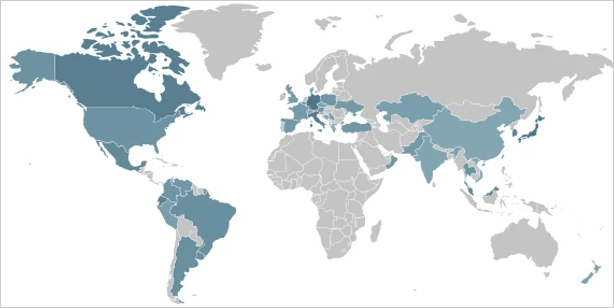
Since at least July, Evooo1Bot has targeted devices from Alcatel, NETGEAR, Tenda, Mitsubishi Electric, Telesquare and D-Link in various regions by exploiting known vulnerabilities.

Source: Fortinet
“While the malware reuses the DDoS engine from the publicly leaked Mirai source code, it extends the original framework with numerous features, including encrypted C2 communications, an SSH brute force scanner, a SOCKS relay module, a credential sniffer, and a built-in exploit arsenal that targets several known vulnerabilities.” Fortinet researchers found.
Newer builds include a separate vulnerability exploitation module that targets Hikvision cameras, Atlassian Confluence, Zyxel firewalls, TP-Link routers, D-Link NAS devices, WSO2 products, Kubernetes Ingress Nginx, and vulnerable PHP-CGI installations.
However, Fortinet notes that some of the embedded exploits were not implemented correctly, resulting in exploitation failure.
When an exploit is successfully exploited, a script downloads one of 12 available malware builds that match the host’s CPU architecture and then deletes the bash history to eliminate traces of the attack.
Evooo1Bot uses encrypted command-and-control (C2) communications over port 443 and performs extensive checks on debuggers, security tools, sandboxes, virtual machines, containers and honeypots before launching on the infected device.
Persistence is established via systemd, SysV init, shell profiles and rc.local, while a cron job attempts to re-download the payload every five minutes.
Source: Fortinet
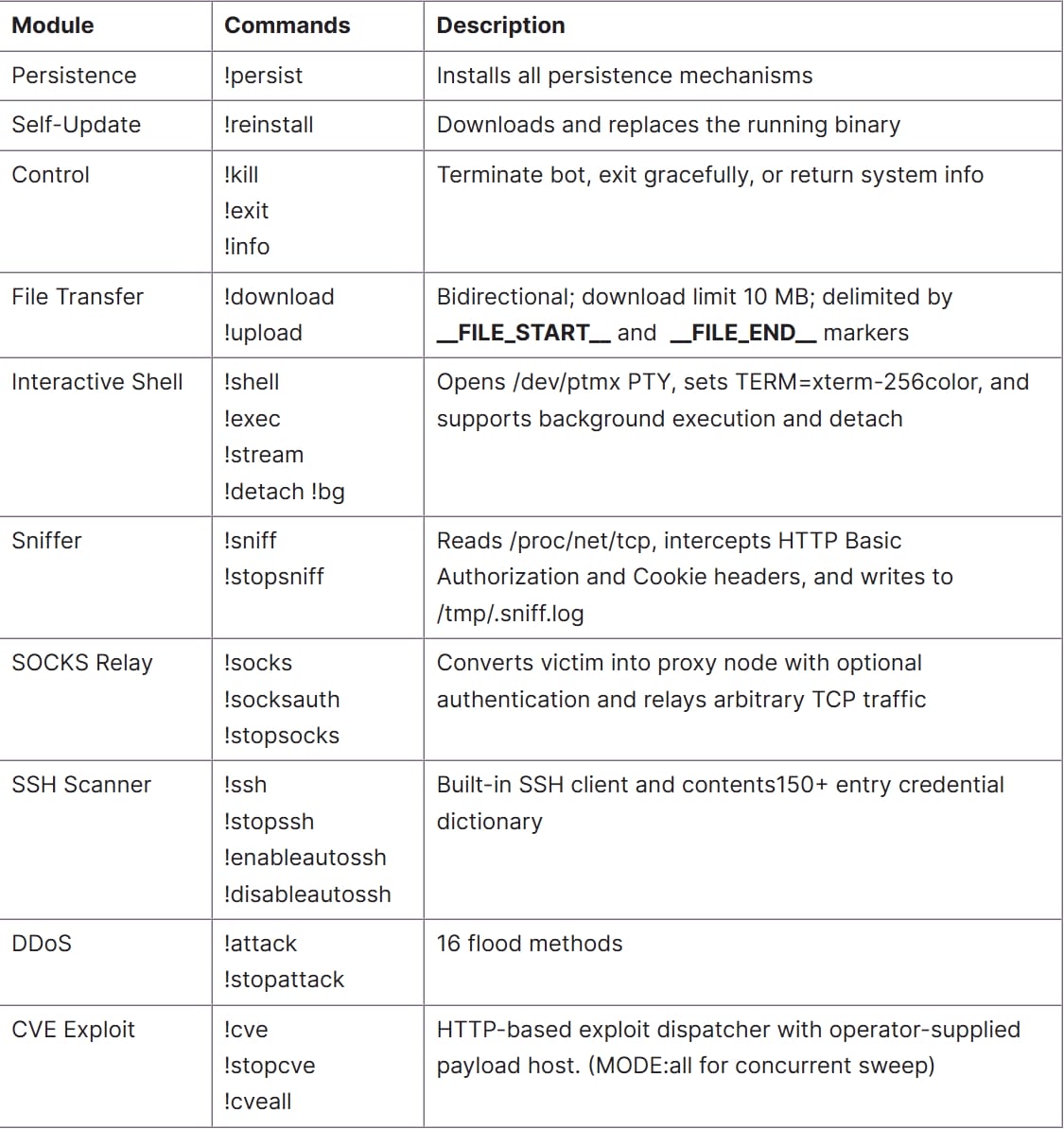
An interactive shell allows operators direct control over compromised systems, while file transfer commands support uploads and downloads.
The malware also has a credential sniffer module that monitors /proc/net/tcp and attempts to capture HTTP basic authentication and cookie headers.
The SOCKS5 module supports direct listening and reverse relay modes, allowing attackers to hide malicious traffic, bypass geographic restrictions, or potentially access networks through compromised systems.
Fortinet says proxy sessions run independently and several can be opened simultaneously, allowing monetization through private proxy services if the botnet grows large enough.
The SSH scanner module uses 150 username and password combinations for business-oriented accounts and performs post-login checks to avoid honeypots.
Finally, the DDoS module inherited from Mirai supports 16 flood methods, including UDP, DNS, SYN, ACK, GRE, fragmented TCP and an HTTP flood with customizable requests.
To protect yourself from botnet malware, keep your IoT devices’ firmware up to date, replace default administrator credentials, turn off remote access panels, and replace devices if the vendor no longer supports them.

Overall prevention scores can hide what happens after the first access. Once attackers use valid credentials, prevention drops sharply.
The 2026 Blue Report measures defense technology for technology in 338 million simulations conducted in customer production environments.