

Microsoft has started testing a faster File Explorer and a cleaner and more customizable context menu in Windows 11 preview versions rolling out to Insiders this week.
As the File Explorer team explained in a blog post Monday, the changes are focused on improving the speed, performance, and reliability of File Explorer, as well as addressing issues reported by customers.
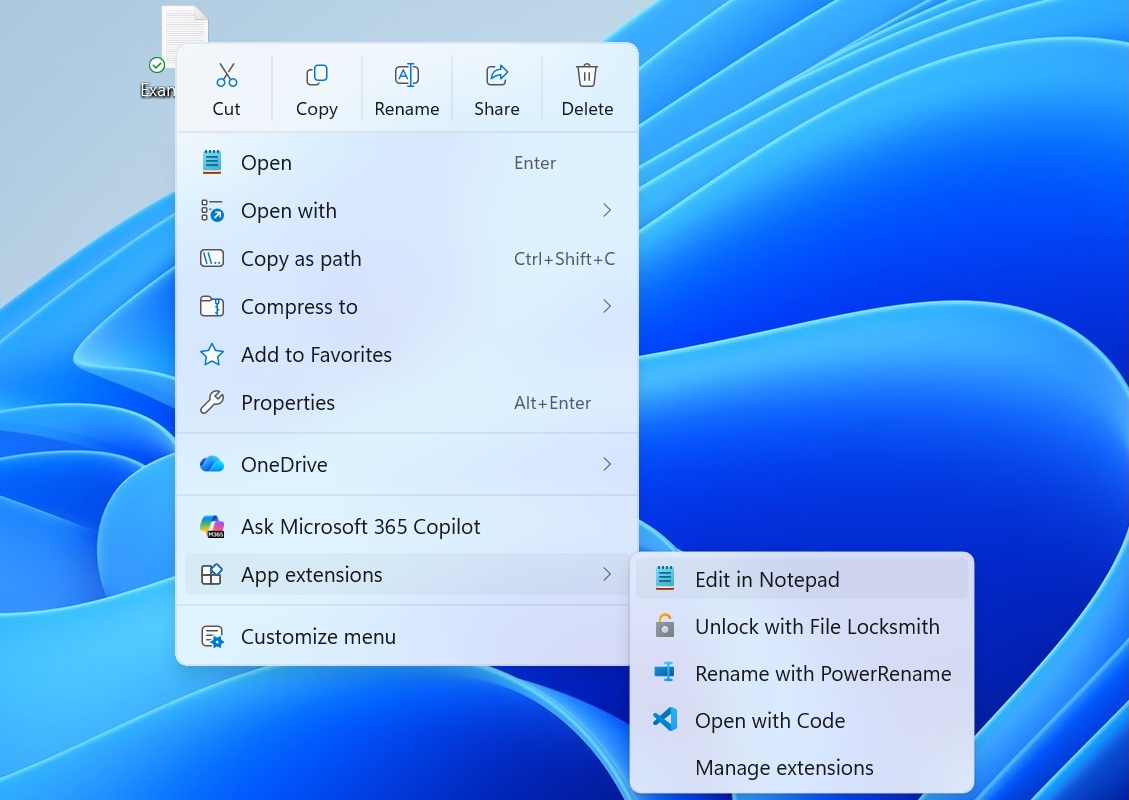
The redesigned context menu experience also aims to make it faster, reduce clutter, and make it more customizable than ever before.

At the bottom of the new right-click menu, Microsoft has also added a “Customize Menu” shortcut to the Settings page that allows users to customize the context menu to suit their preferences.
“Based on this feedback, we’ve continued to refine File Explorer, removing friction and improving the details that help make everyday tasks feel more natural and predictable. For example, file renames are no longer interrupted by background file sync, and case-sensitive filename changes now appear immediately.” Microsoft said.
“Today we’re (also) excited to announce an updated context menu that delivers a faster, simpler, and more customizable experience. The new design reduces top-level clutter, makes commonly used actions easily accessible, and introduces a new settings experience that gives you more control over what appears in the menu.”
These changes follow a broader effort to improve the speed and performance of Windows Explorer for Windows 11 users. Recent changes include another set of File Explorer improvements introduced in April.
Microsoft also began testing a feature in November that would preload File Explorer in the background to improve startup times and performance.
However, this was optional, so users who wanted to disable preloading could uncheck “Enable window preloading for faster startup times” in File Explorer’s View tab in Folder Options.
These changes to File Explorer follow the May 2025 introduction of Startup Boost, a similar optional feature for Microsoft Office apps that launches a scheduled Windows task in the background during system logon to launch Office apps faster.
On Monday, Microsoft also announced that it is removing the Windows Management Instrumentation Command-Line (WMIC) tool known LOLBIN (Living-off-the-Land binary) is being abused by cybercriminals starting with Windows 11 24H2 and 25H2, as well as the Windows 11 beta builds released this week.
Overall prevention scores can hide what happens after the first access. Once attackers use valid credentials, prevention drops sharply.
The 2026 Blue Report measures defense technology for technology in 338 million simulations conducted in customer production environments.