
MICA has left crypto lending out of its core rulebook – but now Brussels is considering whether to bring it in.
On May 20, 2026, the European Commission ask Stakeholders need to keep an eye on the areas left out of the core market of Crypto Assets (MiCA) framework. These include decentralized finance (DeFi) and crypto lending and borrowing.
One area of contention involves lending vaults, which can channel billions of dollars into the onchain credit market without looking like conventional loans. Their legal status currently depends on the non-binding interpretation that they fall outside MiCA and EU funding rules.
Yuri Brisov, EU digital assets lawyer and partner at Digital & Analogue Partners, told the magazine that the law on vaults is currently unclear:
“There is no category in EU law called ‘vault’. A lawyer therefore defines it the way a regulator would qualify it: by function, not by label.”
This is one of a myriad of regulatory issues, as vaults can perform the economic function of lending while spreading smart contracts and other functions over multiple participants rather than a single company.
If Brussels decides lending should come under regulatory purview, what does that mean for DeFi and where does that leave the people and protocols behind these vaults?
Morpho puts the problem into practice
Decentralized lending protocol Morpho’s lending infrastructure gives Here are some clues as to why this question would be so difficult to answer. The way its vaults are set up and managed doesn’t map neatly to any existing regulatory model.
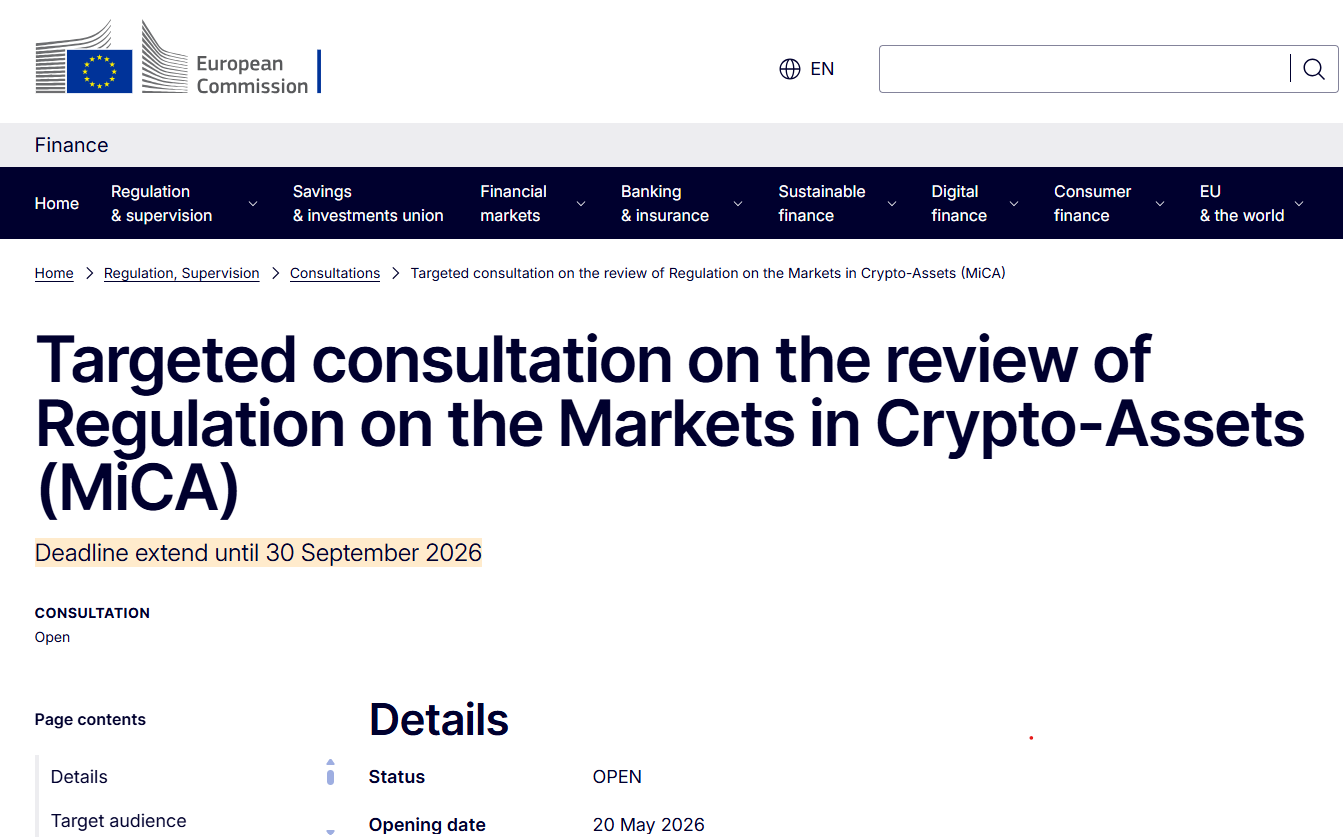
Targeted consultation on the review of regulation in the market of crypto assets (MiCA). Source: European Commission
Its Vault V2 architecture divides responsibilities between owners, curators, allocators and sentinels. The curator configures strategies and risk parameters, while the allocator executes allocations and has sentinel capabilities aimed at mitigating risk.
While none of this establishes one of these participants as a regulated loan servicer under MICA, it does illustrate why identifying the relevant “provider” is less straightforward than a conventional lender.
Related: Bitwise to launch onchain vault via Morpho
Jonathan Galea, a partner at Cahill Gordon & Reindale, explore Recent client updates on lending vaults and their position under EU financial regulation. His analysis looks at how vault structures can sit across MICA, stablecoin rules and European funding legislation.
Gallia said policymakers should be careful about treating lending vaults as a single category, telling the magazine, “Lending vaults solve more practical problems than they create.”
He says that transaction vaults help bring fragmented liquidity directly to the debt market, while other vaults can buy and sell crypto assets and should be treated differently:
“Bring ‘DeFi lending’ into the fold as a single label, and there’s a risk of lumping together structures that deserve the opposite answer.”
This will be important if Brussels decides to regulate lending, since a broad category covering “DeFi lending” could capture structures with very different economic functions – and the people exercising control over them.
Who should actually be regulated?
MICA currently except Crypto asset services that are provided in a “fully decentralized manner”, although this may apply where only part of an activity is performed in a decentralized manner.
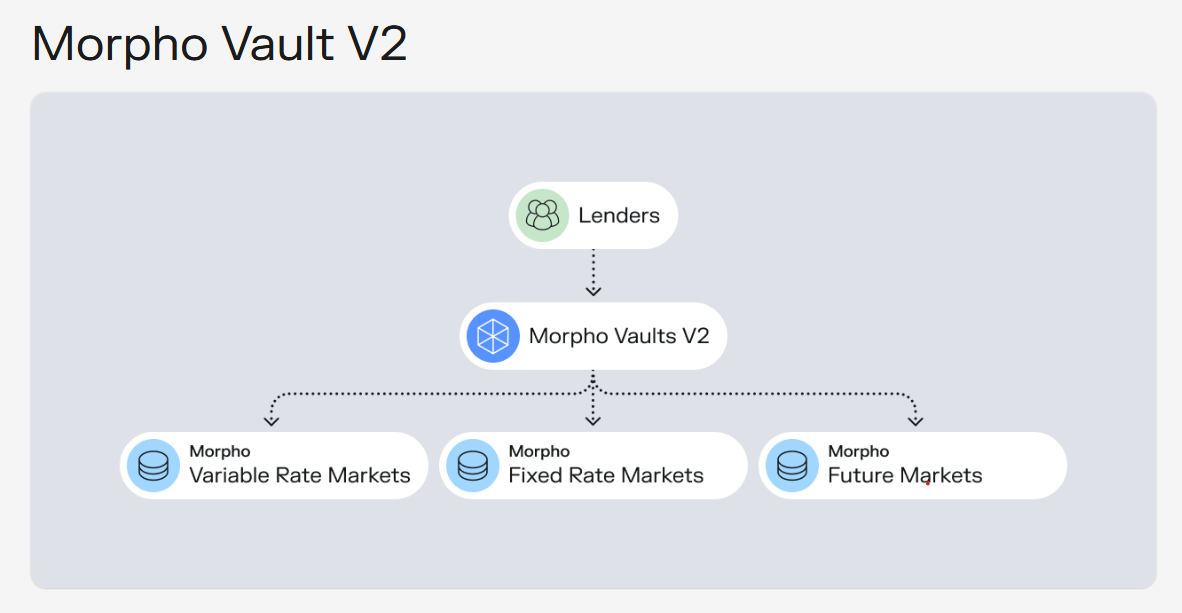
Morpho’s Vault V2 architecture. Source: Morpho
One possible solution is to make decentralization the dividing line, but Gallia argues that could put new protocols at a disadvantage. He said:
“Decentralization is a spectrum and a function of time: an experiment built on it will punish newer, more novel protocols while encouraging mature incumbents who have taken years to distribute control.”
Brisov says the focus should instead be on the structure of the vault and the human control over it:
“The safe ground is structural: no initiative, no appointed manager, the holder has a directly coded claim on the pool, and the user can exit before any parameter changes take effect.”
He says that if Brussels decides to warrant regulations on lending and borrowing, they should be expressly added to the list of regulated crypto asset services rather than expanding the definition of crypto asset service provider.
Related: ‘DeFi doesn’t exist anymore,’ just onchain finance: Andre Cronje
Michael Egorov, founder of Curve Finance, argues that the rules must also account for the differences between decentralized lending and conventional finance. He said:
“If DeFi lending is ever brought under the scope of regulation, it should be treated completely differently. DeFi does not require some of the safeguards that traditional lending requires, and yet, at the same time, it may require others.”
Egorov said that regulation should be approached “really carefully” and that a dedicated framework could improve security and open up DeFi lending to new users, avoiding rules that some protocols cannot comply with because of how they are built.
The commission’s consultation closes on September 30, and what follows could determine whether lending vaults will remain outside MICA or fall under a new regulatory framework.
For Brussels, the challenge is not just to control defiant debt; It’s how to write rules that distinguish between different types of onchain lending and the people (if any) who actually control them.
magazine: 200,000 Fake AI ‘Victims’ Deployed to Bait Online Fraudsters
Cointelegraph publishes long-form journalism, analysis and narrative reports with subject-matter expertise developed by Cointelegraph’s in-house editorial team. All articles are edited and reviewed by Cointelegraph editors according to our editorial standards. Some articles contain affiliate links, from which Cointelegraph may earn commissions. These relationships do not influence which products we review or our editorial decisions The content published here does not constitute financial, legal or investment advice. Readers should conduct their own research and consult with appropriate professionals. Cointelegraph maintains complete editorial independence.