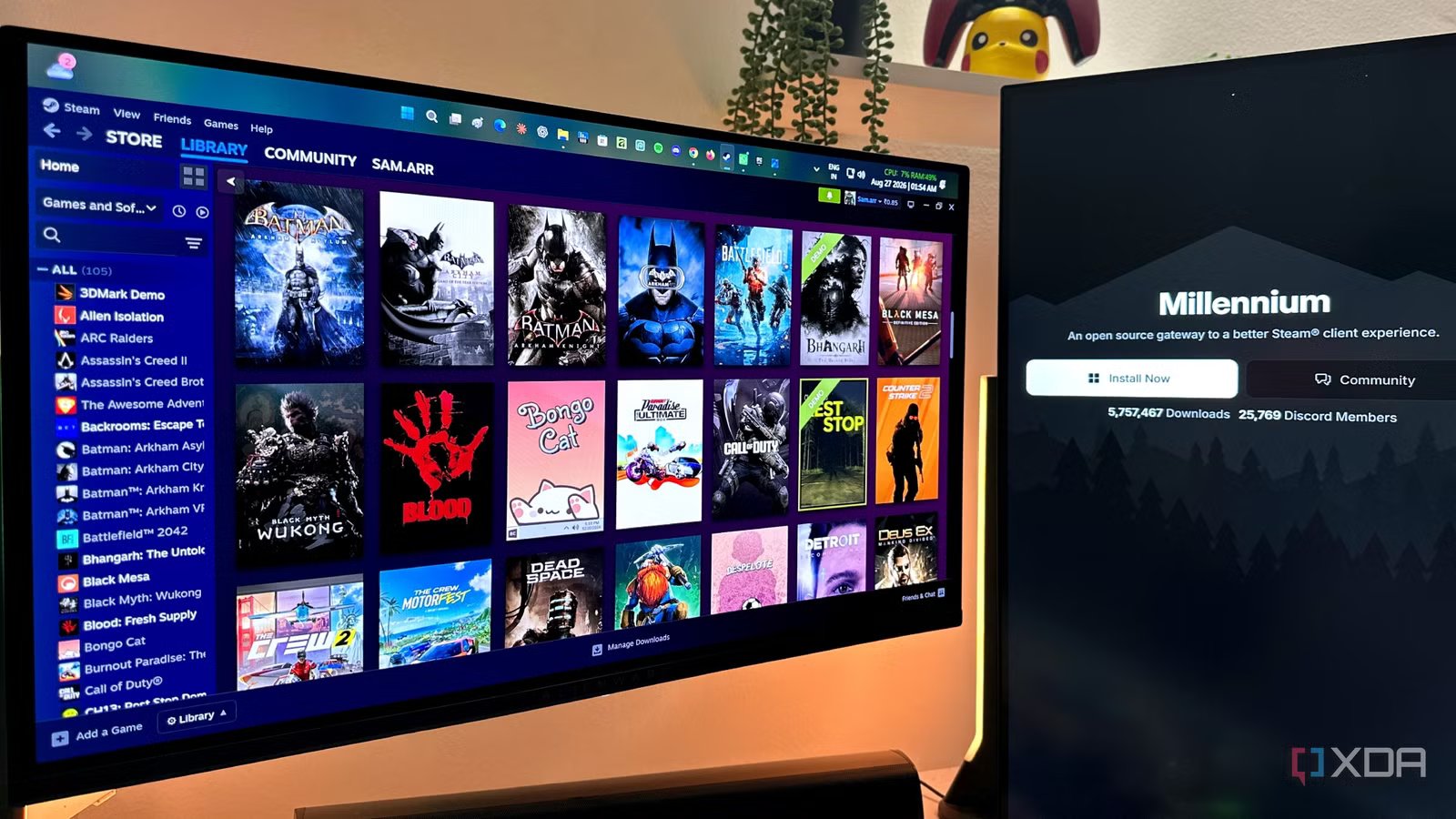
After two decades of using Steam, I’d like to think I know my way around Valve’s launcher. I changed libraries, rearranged my collections, explored its settings and features to improve the experience, and honestly spent more time looking at the games I bought than actually playing them. Anyway, I completely missed that Steam is much more customizable than what Valve offers you out of the box.
With Steam Plugins I was able to enjoy Steam my The valve was a trigger instead of a catch-all, and it took me down a rabbit hole I didn’t expect to find. I’ve only just started experimenting with them, but it made me wonder how I’ve been using Steam for so long without even thinking about setting it up in the first place.
Millennium is what makes “just Steam” “my Steam”.
This is where the customization rabbit hole begins
Me to start customizing the Steam launcher according to my needs and fancy Millennium is loaded. It’s a customization framework for the Steam desktop client that allows you to change the interface and add features that Valve never included. You install it directly into your Steam installation and it integrates with the client instead of replacing it with another launcher like Playnite.
Once installed, Millennium added its own section to the Steam settings and gave me a central place to manage themes, plugins, custom CSS, and other mods. I really appreciate how the change is completely integrated into the new menu inside the Steam launcher that I’ve known all my life.
Millennium is third-party software not developed or endorsed by Valve. Installing such software always poses some risk to your device, but the source of the project will be open source and auditable.
After I launched Millennium, I started with one change that was most obvious – custom CSS headers for the launcher. While experimenting with themes and other visual details, I tweaked the colors and fonts until Steam was a little bit mine. Some of the options were a little sticky, like any software that lets you experiment with themes, but I soon found the right mix of classic and bold custom colors that I liked. That’s when I decided indeed start changing things and go to plugin manager for steam.
I’m starting to fix the little things that Steam is doing wrong
My library immediately became much more useful
Once I realized that plugins could change what Steam actually did, I started to notice how much information was missing. The HowLongToBeat plugin This is an immediate win, as it directly embeds estimated completion times into game pages on the Storefront. I like the idea of buying a new game, it checks all the right boxes for me, but as someone with a full-time job, I’ve always used the HLTB database to inform my purchasing decisions. The HLTB plugin for Steam allows me to do just that, but with zero clicks, because the numbers I need are right under the Buy button.
plugins like Steam Librarian and Collections+ take a different approach. They’ve made organizing and navigating my massive Steam library so much easier. Now, the Dynamic Collections feature in the Steam base is great and I use it all the time, but these new plugins give me more granularity and control over what I see every time I open my Steam library.
These plugins didn’t fundamentally change Steam, but they added features I never knew I needed.
Then there are the little additions that shouldn’t matter almost like they are, but they’ve made the whole experience a lot more polished and informative. The Size in disk pluginfor example, the game tells me how much space it takes up in my library without it right click on the game, go to Properties > Installed Filesthen look at the storage space it takes up — five clicks are replaced by just one new plugin.
None of these plugins really changed Steam for me. But they fill in the gaps I’ve learned to work with over the years, and add some great new features that I never realized I needed in a desktop client in the first place. Paired with custom themes and fonts, my Steam launcher now stands out as completely custom made every time I open it.
Steam is more customizable than I thought
The valve left the door open

The Extendium plugin went deeper down the rabbit hole because it added Chrome Web Store extensions inside Steam. I used it to add a SteamDB page for price history and current price information — it’s a nice little add-on that sits on the Store page, and I love it. Most importantly, I now have a huge ecosystem of extensions waiting for me. outside Special plugins for Steam.
Non-Steam Playtimes is another plugin that I immediately appreciated, especially for my GOG games and “other” non-Steam games. Steam now tracks how much time I spend on these titles.
It’s important to understand why it all works so seamlessly, and the Steam desktop client is built on Chromium, which is the same open source code. The browser framework behind Chrome and countless other Chromium-based apps. Effectively, this means that the Steam launcher is essentially a web application running inside the desktop client, making it surprisingly easy to integrate CSS themes, browser extensions, and all sorts of other modifications.
What makes Millennium feel so familiar to me is this understanding. It reminds me of Jellyfin and the self-positioning rabbit hole: start with something perfectly usable, then keep sewing until it fits exactly how I want to use it. I’ve just started doing this with Steam and love what’s possible.
I’m not going back to the Steam store
I’ve spent an insane amount of time with Steam, leaving no doubt as to whether the launcher itself should remain as Valve sent it. This is perhaps the strangest part of the whole rabbit hole – we’re so used to software being a finished product that the idea of making it fit us feels almost… a foreigner.
I’m suddenly not interested in endlessly tweaking every menu in Steam or installing every plugin I can get my hands on. However, I love knowing that I won’t have to live with it when Steam does something I don’t necessarily care much about.