Key points:
- The U.S. economy added 162,000 nonfarm payroll jobs in August, nearly triple economists’ consensus estimate of 56,000.
- Bitcoin traded at a local low of $78,600 following the data before recovering from $81,300 to $79,500.
- A rival Bitcoin fork using the Blake2b algorithm saw its first trading activity, changing hands at $350 on currency exchange Neoxa.
The labor market tripled expectations
The U.S. economy added 162,000 nonfarm payroll jobs in August, significantly beating economists’ consensus expectation of about 56,000 jobs, according to data released Friday. In response to the announcement, Bitcoin (BTC) traded off local lows of $81,300 to $78,600. At the time of writing it stands at $79,500.
The latest economic data carries extra weight given how divided the rate outlook is ahead of the next Federal Open Market Committee (FOMC) meeting on September 15-16. Under previous Federal Reserve chairs, expectations before the FOMC were mostly well-anchored. However, the lack of forward guidance from chair Kevin Wersh, along with possible dissent from the committee, has added to the uncertainty.
After Fed Governor Christopher Waller said on Thursday that he would favor a rate pause pending upcoming inflation data, the PolyMarkets odds jumped to 60% in favor of a pause and 40% for a 25 basis-point interest rate hike. Friday’s labor market data, however, returned the underlying odds to a 50/50 split.
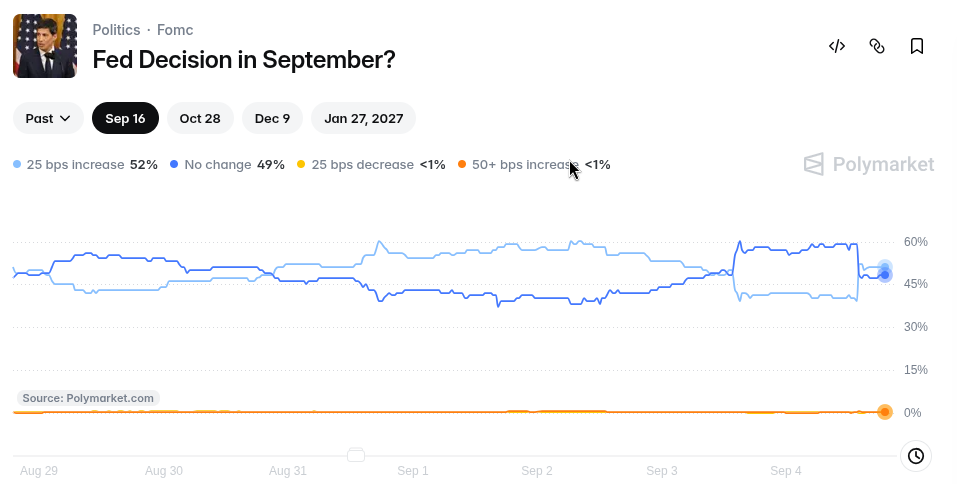
Implied Probabilities for the September 16 FOMC Rate Decision. Source: Polymarket
In response to strong labor market data, U.S. President Donald Trump leveled calls for new rate cuts. “The Fed Board, with its great new leader, must be smart – patriotic for a change,” he said in a Truth Social post and continued: “High interest rates put the United States at a very unfair disadvantage, and I will not let that happen!”
Trump has often criticized former chair Jerome Powell for not cutting rates, but refrained from making a similar statement to Wersch until Friday.
Blake2b version of Bitcoin attracts first liquidity
When the BIP-110 soft fork became active on August 7, the Bitcoin network briefly split into two competing chains: one implementing BIP-110’s new rules and the other continuing under the existing rules. The BIP-110 side essentially stagnated because miners did not devote enough computing power to expanding that chain.
BIP-110 proponents see miners’ refusal to follow a user-activated soft fork (UASF) as evidence that Bitcoin’s mining tier has become too centralized. That criticism has been sharpened by the absence of an organized counter-effort on the part of Bitcoin Core, such as user-rejected soft forks (URSF). Just five mining pools control most of Bitcoin’s hashrate, exerting significant influence over which chain is extended and which transactions are included in the block.
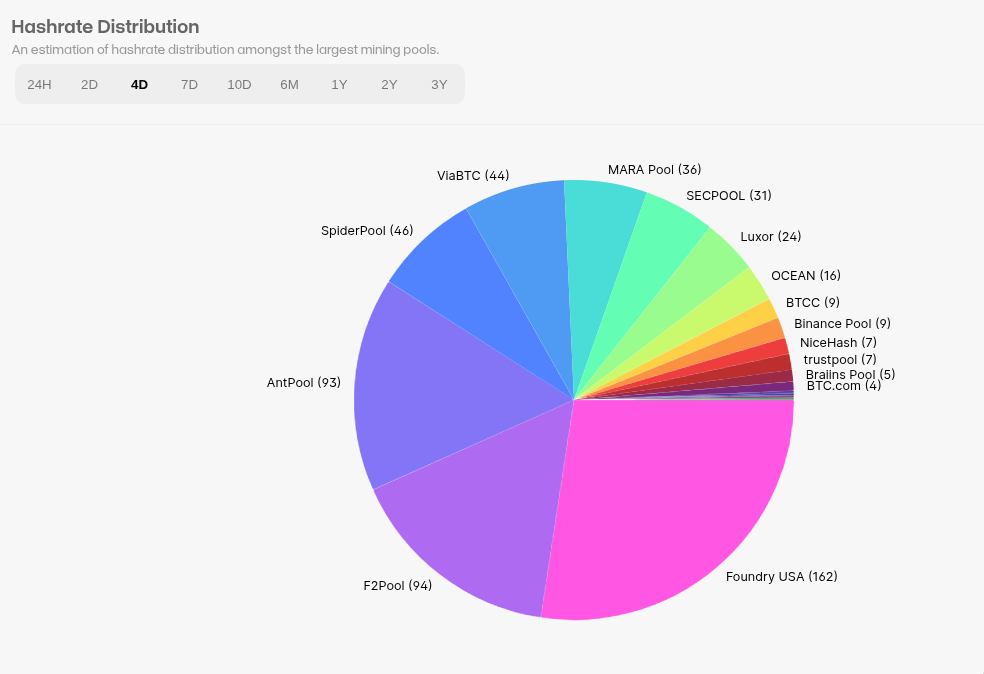
Bitcoin Network Hashrate Distribution. Source: blockchain.com
In response, a subset of BIP-110 supporters, led by LookDashjar, decided to continue the BIP-110 chain by changing the proof-of-work algorithm on Blake2b to allow the emergence of a new, more decentralized miners using DATUM gateway technology. The corresponding hard fork was launched on 30 August. Every address holding SHA-256 bitcoins before (and possibly after) August 7th will hold an equivalent amount in the Blake2b version of bitcoins. So far, the only exchange listing Blake2b Bitcoin is Neoxa. Although liquidity remains thin, Blake2b coin is currently trading at $350 against the USDC with a spread of 1.1%.
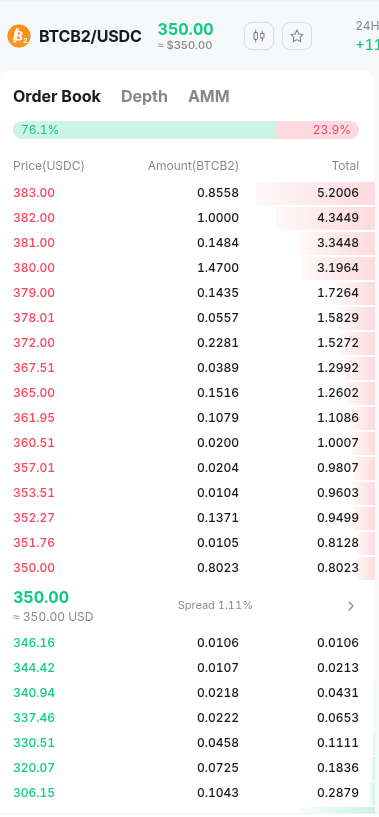
BTCB2/USDC orderbook. Source: Neoxa Exchange
Related: Crypto biz: AI took a back seat when Bitcoin started climbing