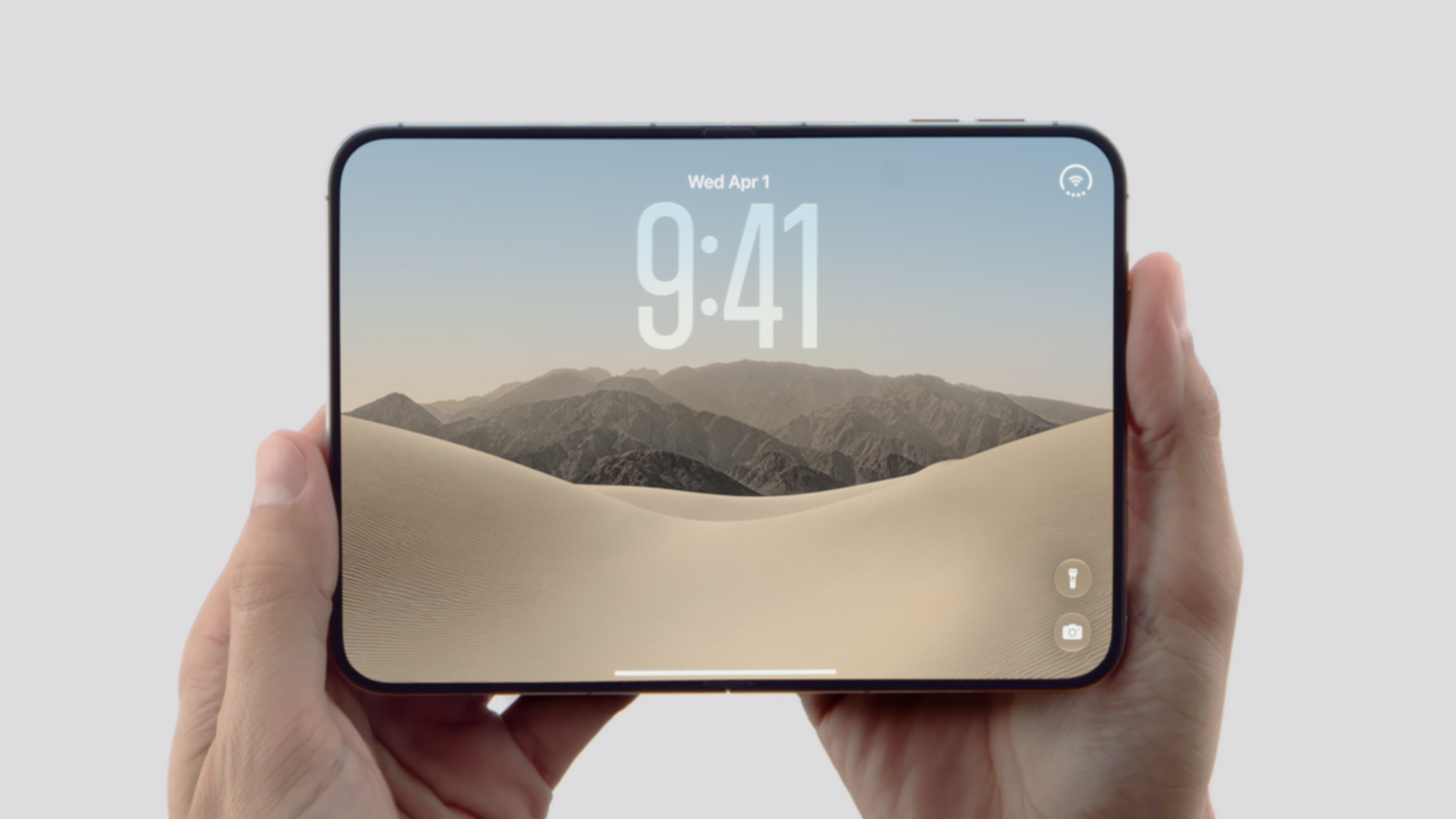
Apple may have hidden the crease well on its first foldable iPhone, but it hasn’t gone away entirely. Early hands-on videos of the iPhone Duo show that the crease is still visible from certain angles, though it’s much harder to see when looking directly at the display.
Videos made in Apple Park give us our first proper look at how Apple’s approach holds up in real-world use. From a right angle, the drive running down the center of the internal display is clearly visible. This isn’t particularly surprising for foldable models where the screen has to bend and unfold multiple times, but it does add some context to Apple’s efforts to minimize this.
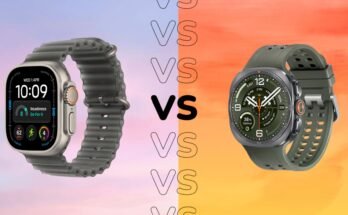
However, when viewed with the naked eye, the crease is almost impossible to see. In fact, early footage suggests the Duo may have a bit of an edge over the Samsung Galaxy Z Fold 8, which also uses a titanium plate under the display to reduce strain and smooth out creases.
Another of Apple’s tricks is the internal screen interface. The Duo uses a matte nano-textured surface that reflects less light, so creasing is less visible than a more reflective display. The surface of the nano-texture also has a scratch-resistant coating that gives the surface some protection.
It is worth noting that these are still early practical impressions. Wrinkling can become more noticeable over time as the display goes through multiple fold and unfold cycles, so the long-term results will only be clear if the phone is used extensively.
Still, Apple seems to have achieved most of what it set out to do. The physical crease hasn’t gone away, and realistically a multi-fold display can’t simply eliminate this physical stress point – but the combination of the display’s construction and the matte finish makes it far less distracting when you’re actually looking at the screen.
So, if you were hoping that Apple’s first foldable device would be completely crease-free, that’s not quite what you’re getting. However, based on early videos, the iPhone Duo’s crease looks significantly less intrusive than you’d think, and perhaps a little less noticeable than Samsung’s latest effort.
\