Resume
-
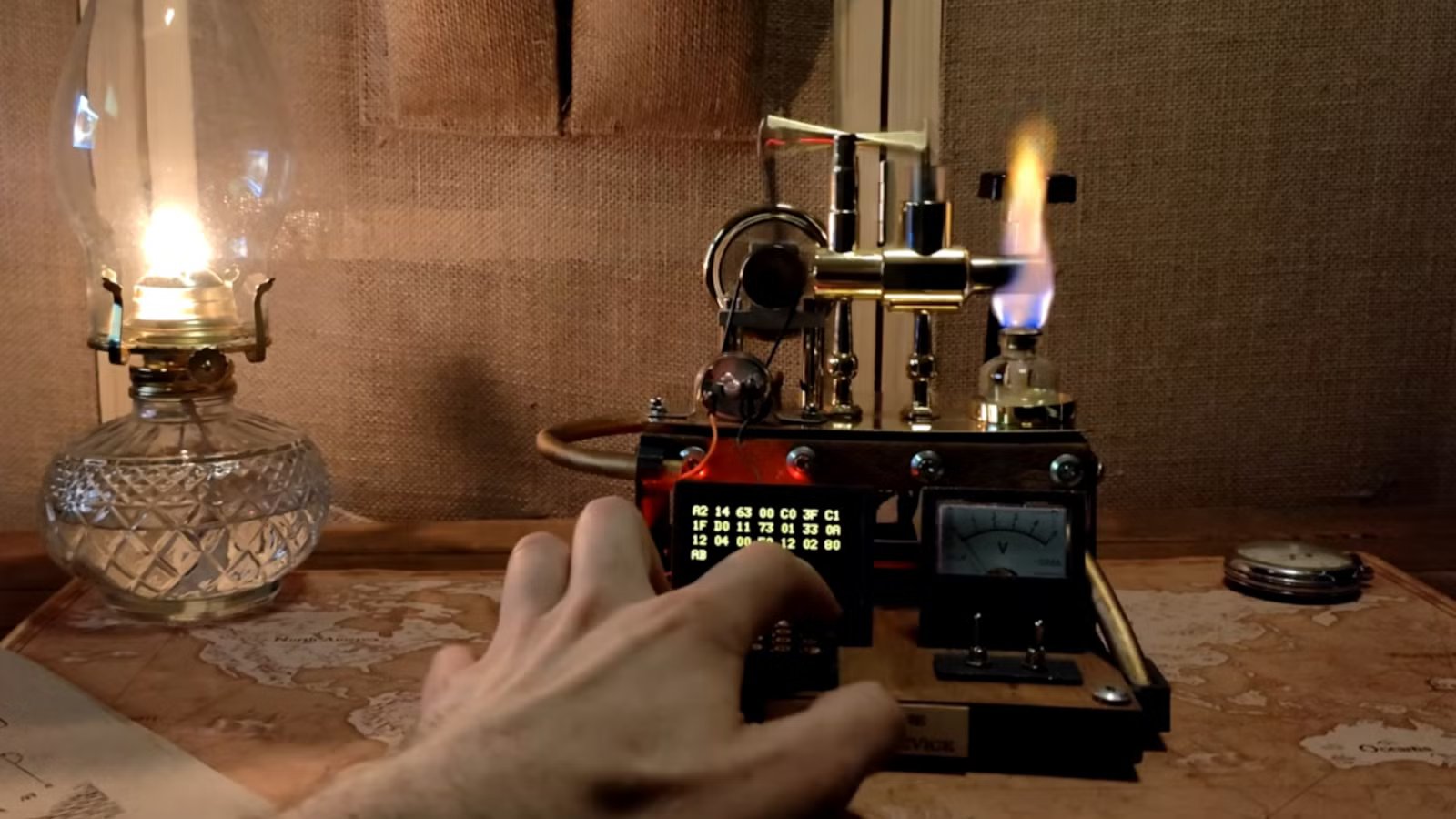
This flame-powered cyberdeck uses a Stirling engine that turns a flywheel to drive an ESP32 microcontroller.
-
The Victorian-style wooden case features a laser-engraved portrait of Robert Stirling, achieved using Floyd-Steinberg dithering.
-
The ESP32 handles raw machine code, making the flame-controlled structure virtually programmable and useful.
Every time the power goes out, there’s a part of me that wants my computer to run on fire. Of course, switching fuel mid-game is a hassle, but it saves on electricity bills. It turns out that someone has actually created a computer that can dissipate heat from flames, and while it won’t be powering your gaming rig any time soon, it’s still a cool little invention.
This fire powered ESP32 computer feels like a Victorian cyberdeck
How much fuel can a rig hold?
As noticed Hucksterit was a great computer idea PickentCode on YouTube. It’s a cyberdeck, it has a cool steampunk theme, and it’s powered by flames. The flame heats a part of the Stirling engine that turns the flywheel, which in turn powers the ESP32 microcontroller that controls the setup. As long as the flame is reached, the PC will continue to work.
The Stirling engine is very simple. It uses the heat of the flame to heat the air in the piston, pushing it inwards. When it reaches the end, the system brings in cool air from outside, which cools the air in the piston and pulls it back again. And he can do it at a fast pace too; There were moments in the video that made me think the whole engine was going to blow itself up.
To build it, PickentCode created a custom “case” using Victorian-style wood oil, then used a Floyd-Steinberg dithering algorithm to etch a detailed portrait of inventor Robert Stirling into the wood with a blue laser. Additionally, the ESP32 itself allows people to create programs using raw machine code, turning an otherwise neat project into an actual usable system to work on.