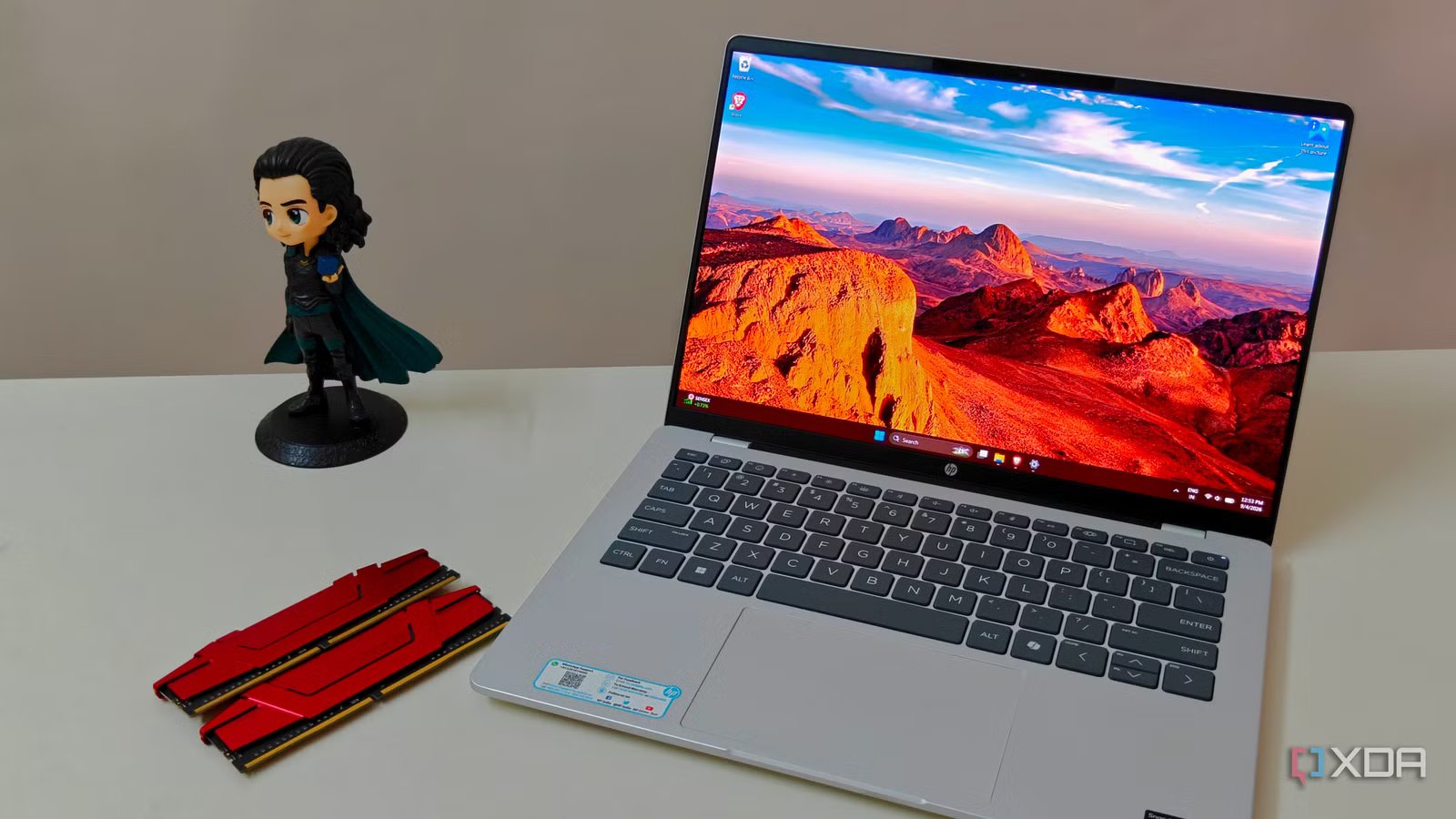
It’s no secret that memory prices will take a few years to return to pre-2026 levels, if at all. Unprecedented global demand has driven RAM prices to insane levels, and the end consumer is bearing the brunt. SSDs and GPUs have also seen significant price increases, and if that wasn’t enough, consumers will now have to adjust to disappearing into modular storage entirely.
Although soldered RAM has been a part of laptops for years, desktop computers are now folding. It started with mini PCs and compact towers, but there’s no telling what the future of desktop memory holds for us. Newer upgradeable standards like CAMM2 are on the horizon, but they won’t be the one-to-one replacement for DIMMs that some people think. A mainstream alternative to soldered memory may be closer than we think.
Soldered RAM has completely covered the laptop market
It’s something cool kids use
Soldered RAM is not a new concept. It was popularized by Apple in the early 2010s with the MacBook Air and Pro models, and others soon followed suit. The motivation for moving from modular SO-DIMMs to soldered RAM is related to space savings, performance, and battery efficiency, all of which are important considerations for ultrabooks and thin-and-light notebooks. Another obvious reason is the additional revenue stream for manufacturers.
Aside from gaming, workstation, and some budget models, most premium and high-end laptops come with non-volatile memory. Whatever you choose at the checkout, you must live forever. Consumers who are used to adding or replacing LPDDR5 modules in their laptops may soon have to say goodbye to this feature.
The hardware limitations of SO-DIMMs make them unsuitable for next-generation DDR6 RAM, so this is the last generation of user-serviceable memory, at least as far as we know. Your next laptop may have soldered-on RAM or the emerging LPCAMM2 standard.
LPCAMM2 offers an upgradeable alternative, but it has a catch
It will not replace everything overnight

As I mentioned, SO-DIMMs cannot meet the hardware requirements of DDR6 memory, so a new standard is being introduced. LPCAMM2 (and CAMM2) modules are 64% smaller than SO-DIMMs and 58% more energy efficient, designed to meet the intensive signaling requirements of DDR6 speeds. These modules are not soldered to the motherboard but are attached with screws so they are user replaceable.
Most laptops have adopted this standard for DDR5 memory. Models like the Lenovo ThinkPad P1 Gen 7 adopted it two years ago, followed by others like the Dell Pro Max 16 Plus and the new ThinkPad P1 Gen 8. CAMM2 is said to combine the performance of soldered RAM with the flexibility of SO-DIMMs, but the latter is not as simple as it seems.
As of current design, laptops only have one LPCAMM2 module, so users cannot add another to increase memory capacity. The existing module must be replaced. While it’s not as bad as soldered RAM, it’s not as user-friendly as SO-DIMM, so I don’t think adoption of LPCAMM2 will be as fast as the industry thinks.
So, soldered memory, SO-DIMM, and LPCAMM2 will have a phase of iteration, where some manufacturers will continue to stick to the old standards.
Even desktop computers are not immune to this trend
Soldered RAM on the desktop is no longer a fantasy
What worries me more is that this trend is not limited to laptops. Even desktop computers are starting to jump on the soldered memory bandwagon. We’ve seen this happen in mini PCs and all-in-ones where compact design is paramount. APUs and AI-oriented PCs require very high-speed RAM connectivity, which is only possible with soldered LPDDR memory.
Additionally, models like Framework Desktop have adopted soldered RAM to remove performance bottlenecks from AI and graphics workloads. CAMM2 comes with DDR6 for desktops, but going parallel to soldered RAM should be of concern to PC enthusiasts. Implementing non-renewable memory in the mainstream desktop may not happen overnight, but the industry’s direction is clear.
The DIY PC market has been using user-serviceable memory in the form of existing DIMMs and the upcoming CAMM2 modules for several years, but the future may change that. Soldered memory improves performance, signal stability and puts more money in the pocket of manufacturers. It may arrive on the desktop sooner rather than later.
DDR6 doesn’t just replace DDR5; it also makes upgradeable memory obsolete
Due to market forces, the introduction of next-generation DDR6 memory will naturally be delayed. That said, the industry is well on its way to steady adoption of soldered RAM, whether it’s for laptops or desktops. The performance, battery efficiency, and form factor benefits are clear, and manufacturers aren’t giving up on the extra revenue.