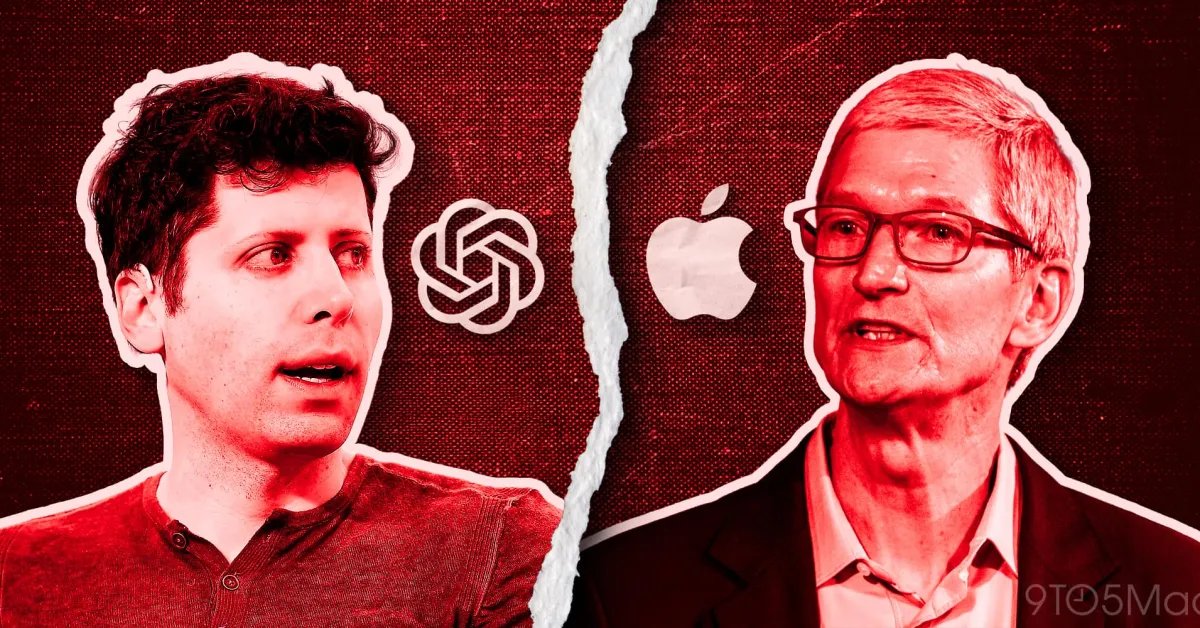
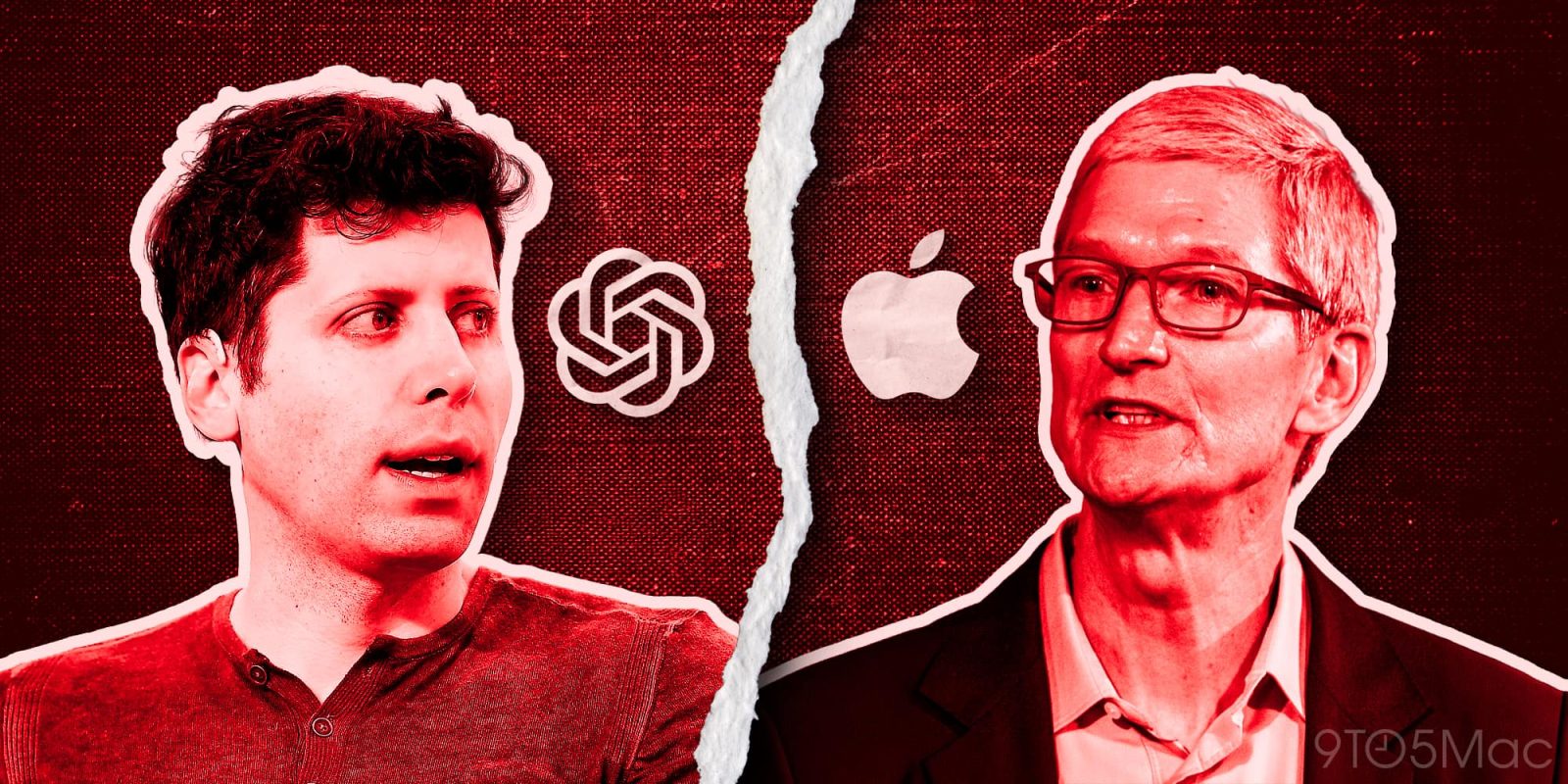
Apple has filed its response to OpenAI’s motion to dismiss a lawsuit in which it accuses two former employees, as well as OpenAI and io Products, of stealing its trade secrets. Here are the details.
A little context
A few days ago, OpenAI filed a motion to dismiss the lawsuit Apple brought against the company, io Products, Chang Liu, and Tang Tan, alleging theft of trade secrets.
In its request, OpenAI said Apple filed the lawsuit “without adequate investigation,” and continued to present the events that led to Apple’s lawsuit.
OpenAI structured its denial around three main arguments: that Apple “has not shown that it owns protectable trade secrets,” the company “has not alleged conduct that supports a claim of deception,” and that it “failed to allege ongoing injury or damage.”
For example, it claims that contrary to Apple’s accusations, former Apple employee Chang Liu was consulted by former colleagues after leaving the company, rather than accessing Apple data without permission, while Apple’s former vice president Tang Tan kept Apple’s employment documents to help ensure that new hires followed its security procedures.
The company also argued that Apple’s own data management and offboarding practices were partly to blame, claiming that employees were encouraged to use personal iCloud accounts for work and that Apple failed to properly cut off access to company data after they left.
‘Apple’s complaint is about a specific person taking Apple’s trade secrets in a specific way’
Today, Apple filed a response to OpenAI’s motion to dismiss the lawsuit, where it picked up on OpenAI’s arguments, and said “that is, the defendants have not contested the alarming allegations at the core of the complaint.”
Apple argues that its original complaint “sufficiently sets forth the trade secrets that the defendants have misrepresented,” and cites previous cases in which the court found similar details to be sufficient to allow the trade secrets claim to move forward.
Apple also said that OpenAI’s accusations that it did not do enough to protect its trade secrets “still lack credibility,” adding that OpenAI “trivialized Apple’s trade secrets as just a ‘supplier relationship’ and then questioned whether the entire ‘supplier relationship’ was confidential.”
The company also argues that OpenAI is also using active mechanisms to disable apps in a wrong way. From the document:
Defendants’ arguments regarding individual defendants ignore the legal standard on motions to dismiss. Again, the defendant relies on an attorney’s argument or extrinsic evidence, hypothesizes an implausible explanation for the defendant’s “innocent” wrongdoing, and asks the court to consider the trial on its own terms. That is not a movement to cancel work. As long as Apple has alleged “sufficient facts to state a claim for probable cause relief on its face,” defendant’s contention on the merits is irrelevant.
In its response, Apple also directly mentions a is heavily edited The exchange that OpenAI published on its website, a conversation in which a former colleague who still works at Apple contacted Chang Liu to clarify some information about the Apple project.
OpenAI argued that the conversation proved that Apple’s characterization of Liu’s post-departure access as theft was misleading, because Apple employees had asked him to help retrieve the data.
Here is Apple’s response:
The complaint does not allege that Mr. Liu answered his former manager’s questions or that Apple employees accessed his personal iCloud account; It alleges that after he left, Mr. Liu exploited an authentication bug to “access Apple’s network repository” which is a cloud storage containing Apple’s confidential data (devices),” celebrated the discovery (“LOL … very funny”), and then spent weeks downloading confidential files while developing hardware for OpenAl A manager’s secret. The repository-and Defendants cite nothing to suggest that anyone at Apple knew or approved of such conduct, in the end, Exhibit A offers an innocent explanation for the complaint’s conduct, while ignoring the problematic conduct.
Apple continues to defend its trade secret theft allegations clearly against Tang Tan, and against his “independent conduct.” That includes disputing OpenAI’s argument that Tan asked job applicants to bring parts that anyone could buy for “show and tell” sessions, rather than confidential components:
Mr. Tan did not ask candidates to bring parts that anyone could buy; He directed Apple employees at the time to bring ‘some of (her) work’, such as ‘(b) battery,’ ‘mlb’ (multi-layer or main logic board), and ‘shield’ – internal components from her secret Apple work, to ‘show and tell’ before the OpenAI hardware team.
And
No one needs a “show and tell” for a “consumer product” that, as the defendants put it, is “widely available and in the public domain.” In addition, several hours before the interview with Mr. Tan, a candidate screenshotted and downloaded a file about a top-secret Apple project that Mr. Tan investigated during the interview. In the petition to dismiss, reasonable inference from these allegations, Mr. Tan requested and received Apple’s confidential hardware information belonging to Apple.
Apple closed its response by “respectfully request(ing) that the court deny all of its defendants’ motions.”
You can read Apple’s full response below:
How are you responsible for Apple’s response? Let us know in the comments.
Worth checking out on Amazon


FTC: We use automatic income affiliate links. More.