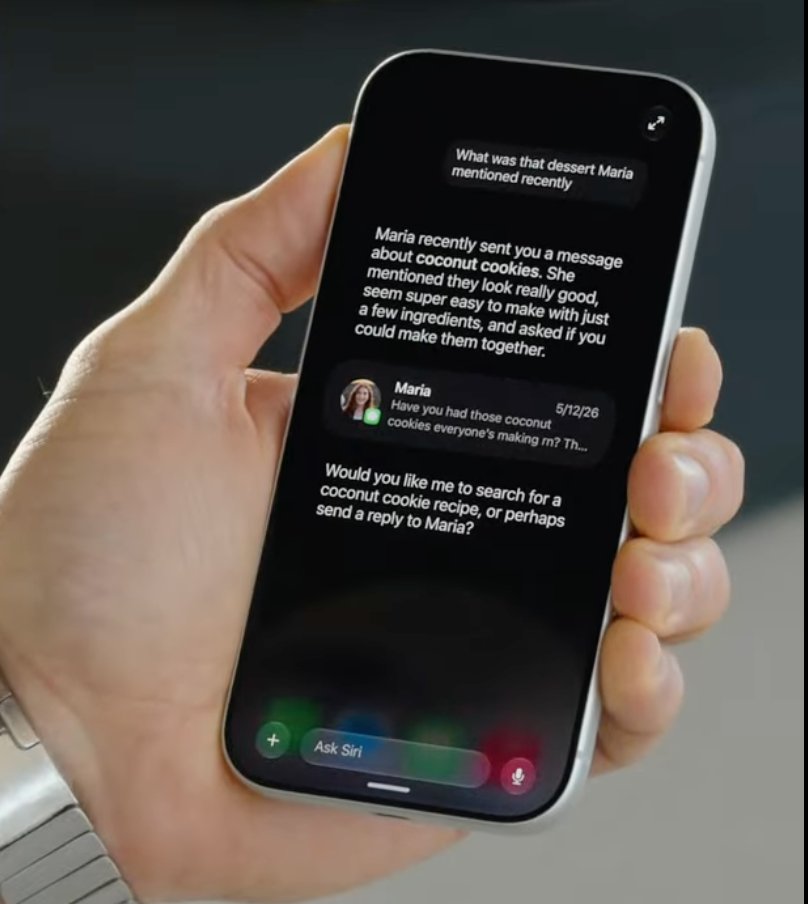
After several rounds of delays, Siri AI arrives in consumer beta in iOS 27 builds, launched in July. The AI assistant now does what Apple promised: it understands your personal context, taps into its vast global knowledge to answer your questions, and displays relevant information stored on your iPhone.
And yet, the arrival feels somewhat anticlimactic. Apple finally has a useful feature – actually, an impressive AI assistant, but it comes at a time when the launch feels new and exciting.
If anything, the AI race has moved forward in the months and years since Apple gave up on AI. Today, AI tools are coding and creating software, AI agents are completing multi-step tasks, and AI is working alongside you, using your computer, reasoning, thinking, remembering, creating media, etc. Being a useful chatbot or AI assistant is not the advancement it used to be.
That is not to say Apple’s Siri AI Not valuable or useful. With the launch of Siri AI, Apple delivered on its promise and then some.
Now you can have a natural, back-and-forth conversation with Siri, which has settings that let you adjust the expression and pace of its voice response. You can also type to the assistant, if you choose, or use it through a dedicated app for the first time, refer to the previous discussion.
Assistants can understand your personal context, helping you find things like photos, emails, contacts, messages, or calendar appointments — even if you’re not sure what or where you’re looking. For example, you can ask it to pull up the last receipt you saved on your iPhone, without telling where it’s stored or what the receipt is for, and Siri will find it for you.
You can also ask it about things you’ve saved just as a picture, like your driver’s license number from a photo of your license, or a QR code you screenshot for later reference, as a reminder to visit someone’s website. You can open websites and use apps through Siri, do things like ask for directions, play music, edit photos, draft emails, play your audio books, and more.
Fortunately, Siri now plays the song, podcast, or audiobook you request on the app you want consistently and accurately, but that’s a low bar to be sure, but one. Where Siri stumbled before.
Siri can brainstorm with you, too. Among other things, it can help you refine ideas, learn about new topics, or search for recipes – like suggesting something you can make with random ingredients in your fridge! You can ask when the band you like is playing or when a certain event happens, and Siri answers correctly, giving you the information you need, based on your location.
You can use Siri in the camera’s viewfinder to learn about things in the real world or to help you share restaurant accounts with your friends.
In short, it’s what you’ve always hoped Siri would be: a useful assistant that helps you use your iPhone easily, just to say, and one that can answer any type of question instead of shuffling you off the web.
These improvements are made possible by Apple’s partnership with Google for the use of its Gemini AI model. Apple doesn’t just slap its name on Gemini AI; It uses Google technology to train and improve its own proprietary Apple Foundation models. The result is an AI model designed to run on Apple’s own silicon and on its private cloud computing infrastructure and actually work.
However, despite finally providing a useful version of Siri, it’s almost as if Apple is fixing a long-standing bug – the ever-broken Siri – rather than doing something revolutionary here. This is how Siri was meant to work all along. The only miracle is that, after years of not doing the job properly, it actually works.
The general public who haven’t run the beta build on their device will get access to the new Siri when Apple officially launches iOS 27, expected in September.
When you purchase through a link in our article, we may receive a small fee. This does not affect the independence of our editors.