Mark Rober has spent years proving that science and engineering don’t have to be homework. His wildly popular videos turn subjects like physics, robotics, and mechanical engineering into spectacular challenges, ingenious pranks, and machines that kids want to understand immediately.
CrunchLabs has taken this approach to the physical world with Build Box subscriptions. Rober is now taking things in a different direction: towards children’s literature.
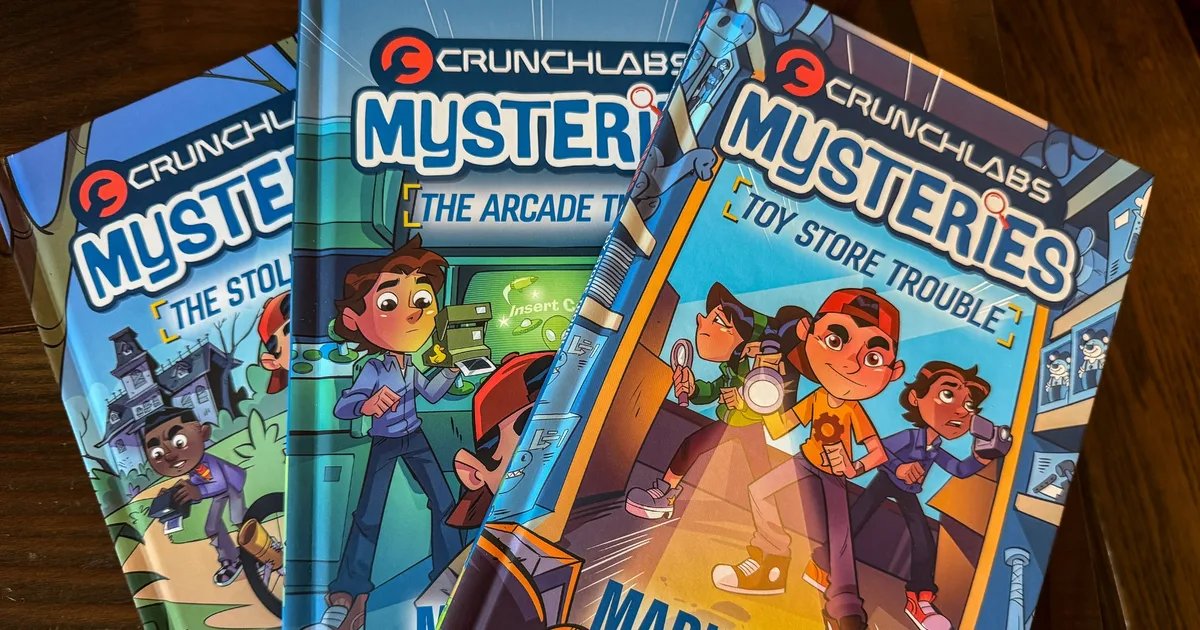
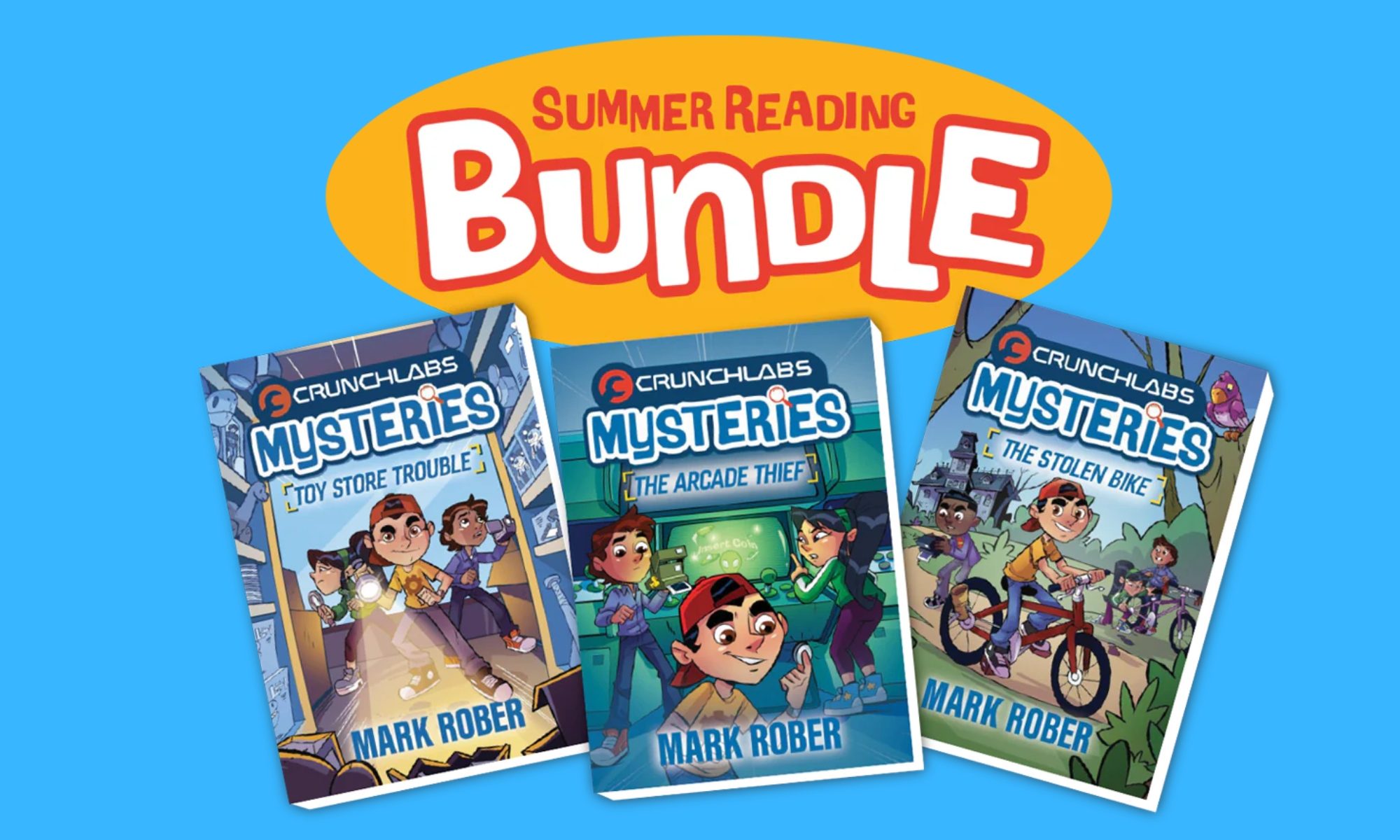
The first three books in the new CrunchLabs Mysteries they are series Game store problem, The arcade thiefand The stolen bike. Each is a hardcover, heavily illustrated mystery starring a fictional 12-year-old Mark Rober. The stories are intended for children reading at roughly third grade or higher, so grades 3-6. 1st grade elementary school students are probably kind.
This age group makes sense. Younger readers are often ready for more substantial stories, but can still be intimidated by long, uninterrupted pages of text. The mysteries provide a natural reason to keep turning the pages, while the illustrations and CrunchLabs’ familiar sensibility make the books more approachable than a traditional science lesson.

The premise also gives Rober an ideal childhood alter ego. Twelve-year-old Mark doesn’t solve problems with superpowers or improbable luck. He observes, experiments, builds, and uses engineering principles to figure out what happened. Science is not glued to a coherent adventure; it becomes part of the hero’s mindset.
This may be the most important idea of the series. Children are often taught science as a collection of facts with correct answers. Design begins with another question: How can I use my knowledge to solve the problem?
Rober’s videos and Build Boxes have always emphasized this process, including the trial, error, and occasional failure that leads to action. Mysteries now extend this approach to reading and storytelling.
Each book continues beyond the final chapter with a hands-on STEM project related to the story, as well as access to a new video featuring the real Rober. Instead of finishing the mystery and immediately putting it back on the shelf, young readers are invited to test one of their own ideas.
I have seen how effective this formula can be.
I gave one of my grandsons a CrunchLabs Build Box subscription for two years and built several projects with it. The sets are thoughtfully designed, interestingly assembled, and based on real engineering concepts. They offered enough challenge to make them satisfying to complete without becoming so difficult that an adult had to take over.
Equally important, the explanation was not an afterthought. A project might create a catapult, a launcher, or a mechanical toy, but the real goal was to understand why it works. Building together created an opportunity to talk about strength, movement, alignment, stored energy, and design decisions without making the experience feel like a performance.
Books seem to use the same model for reading. The child first encounters an engineering idea through characters and a mystery, and then gets the opportunity to create or carry out an experiment related to it.
This series can be especially effective for reluctant readers who like to make things, as well as enthusiastic readers who have not yet discovered an interest in engineering. For a child who might be resistant to a traditional science book, the mystery, the illustrations, or simply knowing Robert from YouTube can engage these stories.
It is also a smart extension of the CrunchLabs universe. YouTube videos can create excitement, and Build Boxes can turn that excitement into action. The mystery series adds another piece for children to read, reason through clues, and imagine themselves as problem solvers. It connects storytelling, videography, and hands-on building, rather than treating them as separate activities.
According to CrunchLabs, the first series will eventually contain 12 books. The larger series is offered as a monthly supplement to existing CrunchLabs subscribers, but the first three books are also available together as a special bundle.
For a limited time, Game store problem, The arcade thiefand The stolen bike sold together for $39.95 including free shipping to the US. The package is currently only available in the United States.
No book series, video channel, or subscription box can turn every child into an engineer. That’s not really the point. A more realistic – and arguably more valuable – goal is to make science feel accessible, creative, and fun before kids decide it’s hard or “not for them.”
This is exactly what these three books are designed to do. They take the curiosity already generated by Mark Rober’s YouTube videos and CrunchLabs Build Boxes and put it into stories that kids can enjoy on their own.
Then, in classic CrunchLabs fashion, readers are asked to stop watching, stop reading, and start building.
\