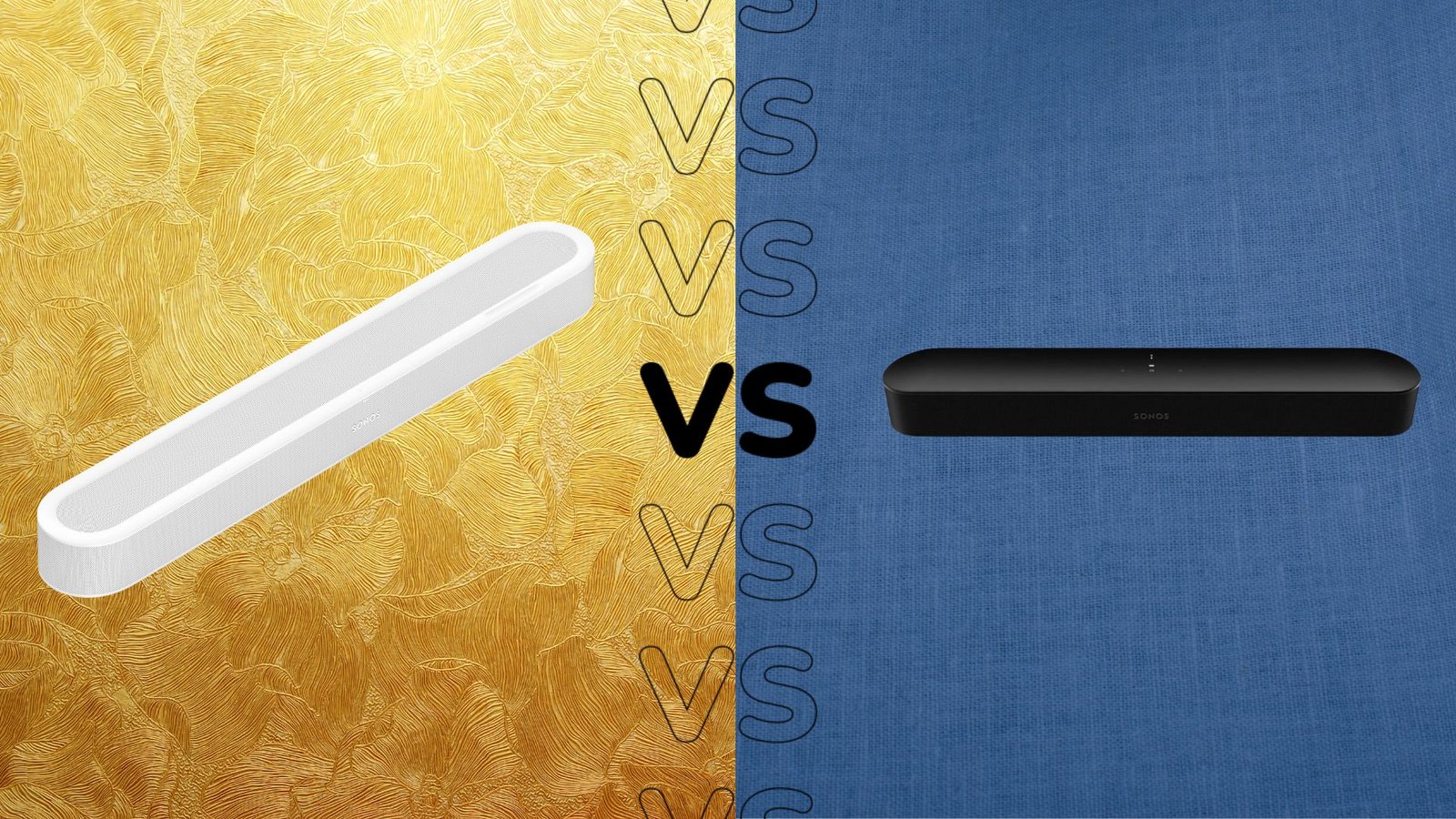
Sonos is known for offering a few best speakers and best soundbars in the market. With that in mind, we’re excited about the recently introduced Beam Ultra.
Sonos promises that the Beam Ultra is “a big step forward in size-defying sound,” but how does it compare to the Beam (Gen 2)? Is it worth upgrading if you’re wearing the older soundtrack?
We’ve compared the specs of the Sonos Beam Ultra and the Beam (Gen 2) and noted the key differences alongside the similarities below. Read on to find out what’s new with the Beam Ultra and whether you think it joins our best soundbar guide.
Price and availability
The Sonos Beam Ultra is currently available for pre-order and will launch alongside the Sonos Ace Ultra at the end of September. The speaker is available in two colors (black and white) and costs £699.
SQUIRREL_PLAYLIST_10208751
In comparison, the Sonos Beam (Gen 2) also comes in a choice of black or white, but has a cheaper RRP of £499. Plus, since this has been around for a few years, the Beam (Gen 2) can also be found at a decent price cut.
SQUIRREL_PLAYLIST_10208752
The Sonos Beam Ultra is equipped with nine drivers
While the Sonos Beam (Gen 2) is equipped with a total of five drivers, the Beam Ultra boasts nine drivers. Sonos explains that it has added forward-facing drivers to “deliver more powerful and dynamic sound in the left, right and center channels,” while new upward-firing drivers “add height as a third dimension to sound.”
That’s not to say the Beam (Gen 2) doesn’t sound good. In fact, we concluded that the Beam (Gem 2) “sounds exceptionally good” for its small size. While there are some limitations in terms of surround sound and bass performance, these can be improved by adding more Sonos components to the mix.

However, the Sonos Beam Ultra takes the lead here, as Sonos explains that there is “no need” to pair separate front speakers with the soundbar, as it “generates spacious, precise sound”. With that in mind, the Beam Ultra feels like a more complete device than the Beam (Gen 2) – though bear in mind that we haven’t reviewed the soundbar ourselves, so we can’t verify that just yet.
The Sonos Beam Ultra is designed for medium-sized rooms
Sonos explains that the Beam Ultra is designed for medium-sized living rooms between 23 and 32.5 m2. By comparison, the Beam (Gen 2) is designed for rooms up to 250 square feet, which equates to roughly 23m2 – the opposite of the smaller scale of the Beam Ultra.
This means that if you have a larger living room, you can benefit from the Beam Ultra, while smaller rooms will do better with the more compact Beam (Gen 2).

The Sonos Beam Ultra provides a 7.1.2 surround sound experience
Thanks to its architecture, the Beam Ultra promises a true 7.1.2 surround sound experience, consisting of seven crisp ear-level channels, one deep bass and two treble channels. The result, according to Sonos, is a detailed and spacious listening experience made possible by Dolby Atmos support.
However, we must deny that the Dolby Atmos experience requires Dolby Atmos-encoded content and a compatible HDMI eARC connection.
Beam (Gen 2), on the other hand, creates 5.1.2 surround sound and supports Dolby Atmos content.
Both weigh the same
Despite their prowess, the Beam Ultra and Beam (Gen 2) weigh just 2.88 kg. Both have a similar design, however, the Beam Ultra is slightly lower and 3.9 inches wider than the Gen 2. Also, since it now offers upward-firing drivers, the Beam Ultra also gets a top cooling grille.
Either way, both soundbars can be conveniently placed under the TV or mounted on the wall.

Early judgment
We’ll have to wait until we review the Sonos Beam Ultra to make a definitive verdict. However, with the inclusion of upward-firing and forward-facing drivers, the Beam Ultra feels like a fuller soundbar that may not require additional equipment. If you have a larger room and don’t want to throw in multiple speakers, the Sonos Beam Ultra seems like a better choice than the Beam (Gen 2).
That said, the Beam (Gen 2) is a brilliant and more affordable way to improve your TV’s sound quality – especially if you’re in a smaller room.
\