
Brady Snyder / Android Authority
to add Android Authority On Google:
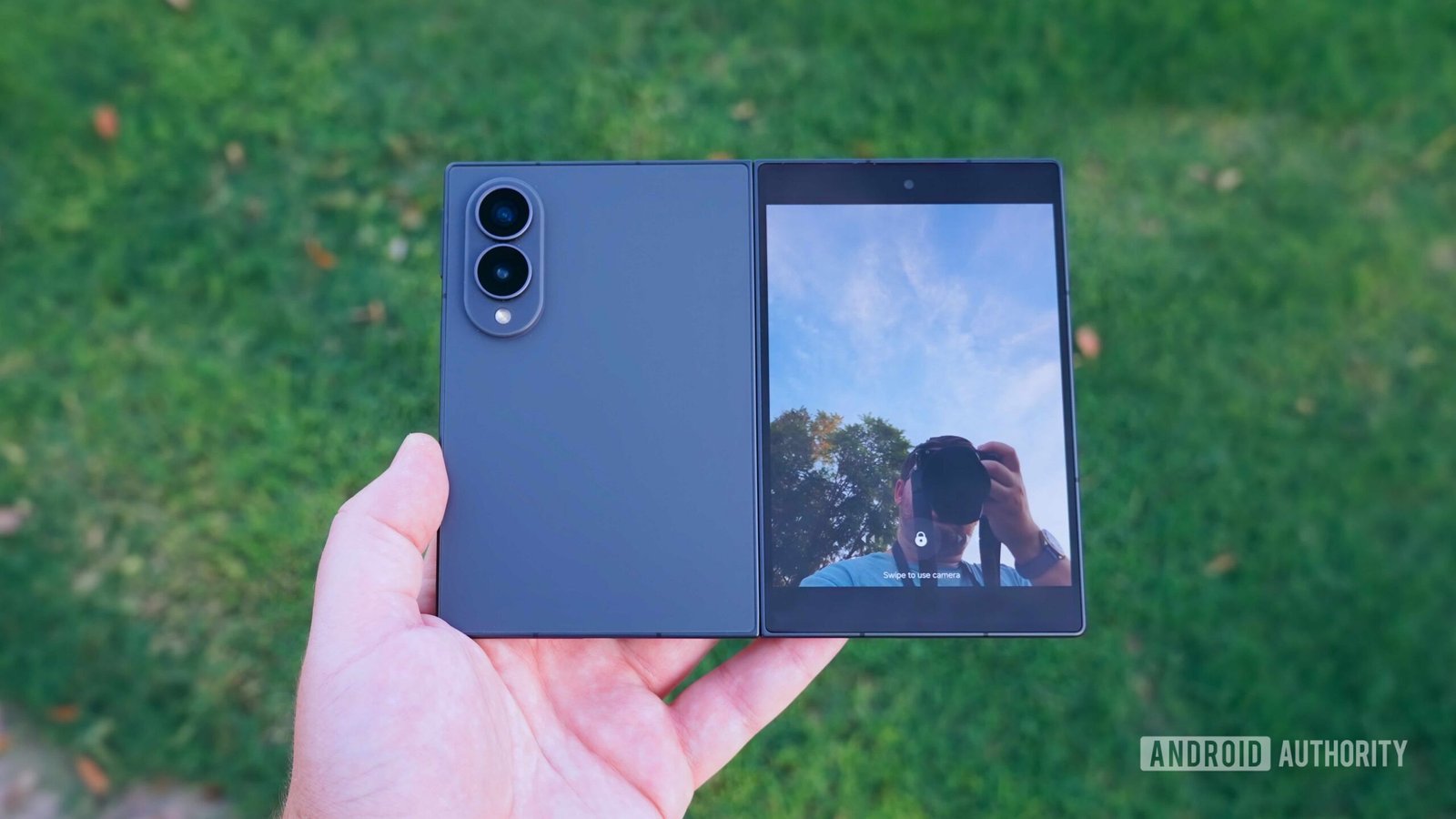
When I first heard about Samsung’s plans to create a spacious Galaxy Z Fold 8, I knew I wanted it in my pocket. The 16:10 cover screen and 4:3 main screen ratios sound great for widescreen content consumption and make for a compact form factor when closed. Before I bought myself a Galaxy Z Fold 8, I went through the spec sheet and looked for any significant downgrades. The slightly smaller battery and rear dual-camera system didn’t disappoint, but the lack of Flex mode surprised me.
Flex Mode allows you to lift a foldable device like a laptop. It uses hardware that keeps the hinge in place and software that makes the most of the split-screen user interface. I’ve been using Flex Mode on Samsung’s foldable devices since the Galaxy Z Flip 3, and it’s been my preferred way to watch videos on a desk or table.
The wide Galaxy Z Fold 8 lags Flex mode due to the twisting hinge, which I’m afraid will ruin my dream foldable. Instead, the hinge on the new Galaxy Z Fold 8 was my favorite.
Is the lack of Flex mode on the Galaxy Z Fold 8 a deal breaker?
2 votes
Galaxy Z Fold 8 hinge I want to open it

Brady Snyder / Android Authority
The hinge on older Samsung foldables was great for holding itself in place. You can open the Galaxy Z Fold 7 halfway and enjoy a split-screen experience in Flex mode. The hinge remained fixed, and One UI added intuitive software features tailored for laptop-like mode. For example, the bottom half houses media controls, while the top half plays videos. Another feature turns the bottom half of the Galaxy Z Fold or Galaxy Z Flip into a virtual trackpad, with the top half reserved for One UI. This year, only the Galaxy Z Fold 8 retains support for Ultra Flex Mode.
At first, I was worried that the Galaxy Z Fold 8 wouldn’t have Flex Mode support to help differentiate it from the Galaxy Z Fold 8 Ultra. That would be disappointing as a Galaxy Z Fold 8 buyer. Instead, it’s not, because the Galaxy Z Fold 8 has a new hinge that works differently than the older Galaxy Fold devices and the Galaxy Z Fold 8 Ultra. Samsung says A new titanium-based display structure, refined hinge mechanics and magnetic force “makes opening smoother, lighter and more natural.”
You have to start opening the phone yourself, but the hinge does the job.
In practice, the changes mean that the Galaxy Z Fold 8 is significantly easier to open. When you open the Galaxy Z Fold 8, your fingers and hands do all the work about three-quarters of the way open. You are fighting the hinge mechanism’s own resistance. What’s new is that the hinge snaps into place when you cross the 75% threshold and the phone is fully opened. After that point, hinge mechanics and magnetic force do all the work for you.
If you haven’t used the Galaxy Z Fold 8 yourself, imagine what it’s like to use the steering wheel of a car. After moving the wheel to make a turn, you can release the wheel grip and it will automatically return to the center position. You’re moving the wheel to make the car turn, but it takes virtually no force for the wheel to come back to you. The unlocking process for the Galaxy Z Fold 8 is similar. You have to start opening the phone yourself, but the hinge does the job.
The ease of opening the Galaxy Z Fold 8 made me want to use its 7.6-inch foldable display more than any other foldable. There is usually a lot of friction to open the main display on a foldable device. You only need two free hands and a few seconds to open it, which is why many folding users spend most of their time on the cover screen. The Galaxy Z Fold 8’s quick-open hinge allows me to use the foldable screen more than the cover screen, and this phone has a sticker price of $1,899.
Tent Mode is just as useful as Flex Mode

Paul Jones / Android Authority
Flex Mode’s split-screen user interface was nice, but what I really enjoyed was using Samsung’s foldable device. I hate watching videos while laying my phone on a desk or table and Flex mode solved that problem. Fortunately, there is a way to secure my Galaxy Z Fold 8 Place on a flat surface while watching videos. It is commonly known as “tent mode”. All I need to do is activate the cover screen, open the hinge and install the folding like canopy. The flip screen sits just right at a perfect viewing angle and I can watch videos like I did in Flex Mode.
There are several disadvantages to using tent mode compared to Flex mode. First, you’ll miss out on all the One UI software magic that comes with Flex mode. Tools like the virtual touchpad and system media controls have been removed. However, I find that you have to touch the screen to control playback or scrub the timeline. I’d still go for the Galaxy Z Fold 8 over the Galaxy Z Fold 8 Ultra, as the former’s 16:10 cover screen is perfect for widescreen content. It fills the cover screen without needing to scale.

Stephen Radohia / Android Authority
Roof mode on the Galaxy Z Fold 8 is more stable than Flex mode on the Galaxy Z Fold 7 or Galaxy Z Fold 8 Ultra. The slim and light form factor of Samsung’s foldable devices, paired with their large rear cameras, makes finding the perfect spot for Flex Mode harder than ever. As someone who hates scratches, I didn’t like putting my cover screen on flat surfaces while using Flex Mode. I liked the tent mode on the Galaxy Z Fold 8, even like the Flex mode on other Samsung foldable devices.
If you want Flex mode, get the Galaxy Z Fold 8 Ultra

Paul Jones / Android Authority
It’s good that Samsung kept Flex Mode on the Galaxy Z Flip 8 and Galaxy Z Fold 8 Ultra, as it’s a useful feature that some folding fans won’t want to give up. This makes more sense for the Galaxy Z Fold 8 Ultra, which is designed for productivity and multitasking rather than content consumption. On the other hand, the Galaxy Z Fold 8’s short and wide form factor is good when unfolded. Samsung made the right choice by changing the hinge mechanism of the Galaxy Z Fold 8 to make it easier to open, even if we lose Flex mode along the way.
I’ve tried many foldable devices and bought a few myself, but rarely felt that a foldable display was worth the extra cost and bulk. I didn’t feel like I used the home screen enough to justify all the shortcomings. Samsung’s Galaxy Z Fold 8 finally flips the script. I open it almost whether I’m sending a quick text, reading an article, or watching a TV show. Quick release hinge – thank you. I now make the most of the foldable display, and it’s more valuable to me than the Flex mode, where I’ve had to use it more than once.
Thank you for being a part of our community. Please read our Feedback Policy before posting.